Understanding ARV: The Number That Drives Every Deal Decision
A deep dive into After Repair Value — how to compute it, validate it, and avoid the mistakes that cost investors thousands.
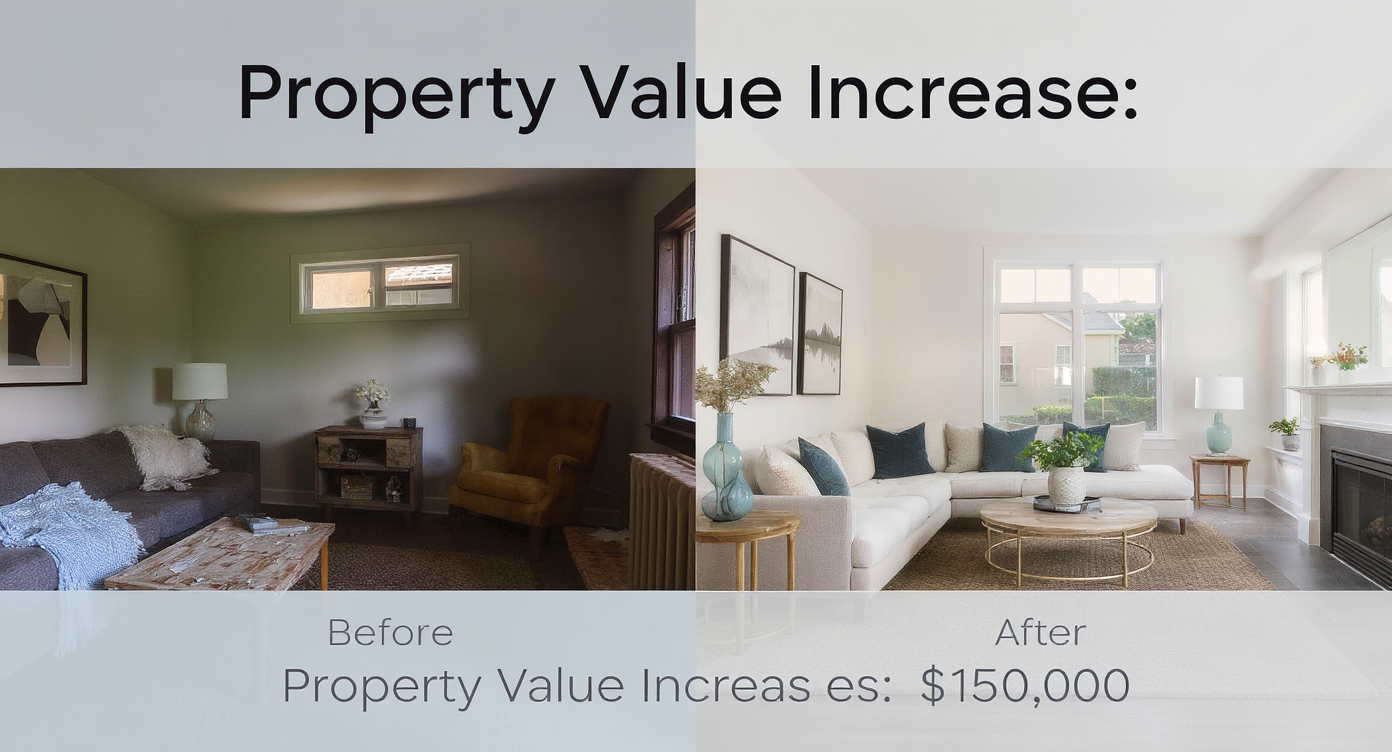
ARV Is the Starting Point of Every Analysis
After Repair Value (ARV) is the projected market value of a property after all renovations are completed. It is the single most important number in your deal analysis. Your Maximum Allowable Offer, profit projection, holding cost estimate, and financing terms all derive from ARV.
Get ARV wrong by even 10%, and your entire analysis breaks down.
How ARV Is Computed
ARV is determined by analyzing comparable sales — recently sold properties that match your subject property in location, size, type, and renovated condition. The process:
1. Identify Your Subject Property's Post-Renovation Profile
Before pulling comps, define what your property will look like after renovation:
- Square footage (is it staying the same, or are you adding space?)
- Bedroom and bathroom count (are you adding a bathroom?)
- Finish level (standard builder-grade, mid-range, or premium?)
- Property type (single-family, townhome, duplex)
- Lot size and features (garage, yard, pool, etc.)
You're pulling comps that match the FINISHED product, not the current condition.
2. Pull Comparable Sales
Search for sold properties within:
- 0.5 miles of your subject (expand to 1 mile only if necessary)
- Last 6 months (expand to 12 months only if necessary)
- 20% of your subject's square footage (1,200 sqft subject → 960-1,440 sqft comps)
- Same bedroom/bathroom count (or within 1)
- Renovated condition (you want comps that were already fixed up)
Pull 5-8 comps to start. You'll narrow to your best 3-5.
3. Adjust Each Comp
Adjust for differences between each comp and your subject's post-renovation profile:
- Size: $40-80/sqft adjustment
- Bedrooms: $5,000-10,000 per bedroom difference
- Bathrooms: $3,000-8,000 per bathroom difference
- Garage: $5,000-15,000
- Lot size: $1,000-5,000 per significant difference
- Condition/finish level: $5,000-20,000
4. Average and Round Down
Average your adjusted comp values. Then round down — always use the conservative number.
ARV Validation Techniques
Computing ARV from comps is step one. Validating it is equally important.
Price Per Square Foot Check
Divide your ARV by your subject's square footage. Compare this $/sqft to the neighborhood average.
If the neighborhood averages $130/sqft for renovated homes and your ARV implies $155/sqft, you're probably too high.
Days on Market Analysis
Check how long renovated homes are sitting on the market in your area:
- Under 15 days: Strong market, ARV is well-supported
- 15-30 days: Normal market, ARV is reasonable
- 30-60 days: Slowing market, consider reducing ARV by 3-5%
- 60+ days: Weak market, reduce ARV by 5-10% and factor in extended holding costs
Active Listing Comparison
Check current active listings of comparable properties:
- If renovated homes are listed at prices similar to your ARV, that supports your number
- If there are many listings sitting unsold at or below your ARV, downward pressure exists
- Adjust ARV based on what the market is currently absorbing
Absorption Rate
How many renovated homes are selling per month in your target neighborhood?
- 5+ sales per month: High absorption, your ARV is well-supported
- 2-4 sales per month: Moderate absorption, be slightly conservative
- Under 2 per month: Low absorption, factor in 60-90+ day holding period and reduce ARV accordingly
Common ARV Mistakes
1. Using Automated Valuations
Zillow Zestimates, Redfin estimates, and similar automated tools are algorithms, not appraisals. They can be off by 10-25% in both directions. Always use actual comp sales.
2. Cherry-Picking High Comps
Selecting only the highest-selling comps to justify a deal you want to do. Use ALL relevant comps, including the lower ones. If 3 of your 5 comps suggest $150K and 2 suggest $175K, your ARV is closer to $155K, not $175K.
3. Comparing Different Finish Levels
A comp that was renovated with quartz countertops, hardwood floors, and custom tile doesn't support an ARV for your property if you're installing laminate countertops and vinyl flooring. Match the finish level.
4. Ignoring Market Trends
A comp that sold 8 months ago at $200K might not support a $200K ARV today if the market has softened. Track price trends in your target area quarterly.
5. Not Accounting for Neighborhood Differences
Two properties 0.5 miles apart can have very different values if they're in different school districts, on different sides of a major road, or in neighborhoods with different crime levels. Physical proximity alone doesn't make a good comp.
ARV in Different Strategies
Wholesale ARV
For wholesaling, ARV needs to be conservative. Your end buyer (a flipper) will re-analyze the deal. If your ARV is inflated, they won't buy. Use the 70% Rule: MAO = ARV × 0.70 - Repairs - Wholesale Fee.
Flip ARV
For flipping, ARV accuracy directly impacts your profit. Overestimate ARV and you overpay for the property, overbudget for renovations, and potentially sell at a loss. Be conservative and add margin.
Rental ARV
For buy-and-hold, ARV matters for refinancing. If you plan a BRRRR strategy (buy, rehab, rent, refinance, repeat), the bank's appraised value after renovation determines your refinance amount. Banks use their own comps, which may differ from yours.
The Bottom Line
ARV is the foundation of every real estate deal. Compute it from 3-5 adjusted comparable sales within 0.5 miles and 6 months. Validate with $/sqft, days on market, active listings, and absorption rate. Be conservative. Cherry-picking high comps costs investors more money than any other analysis mistake. Get ARV right and everything else falls into place.
Ready to automate your acquisitions?
See how AutomizeCRM can transform your real estate business.
Schedule a Demo