Flipping Houses in 2026: A Step-by-Step Profitability Guide
The complete house flipping process — from finding deals to renovation management to selling for maximum profit in today's market.
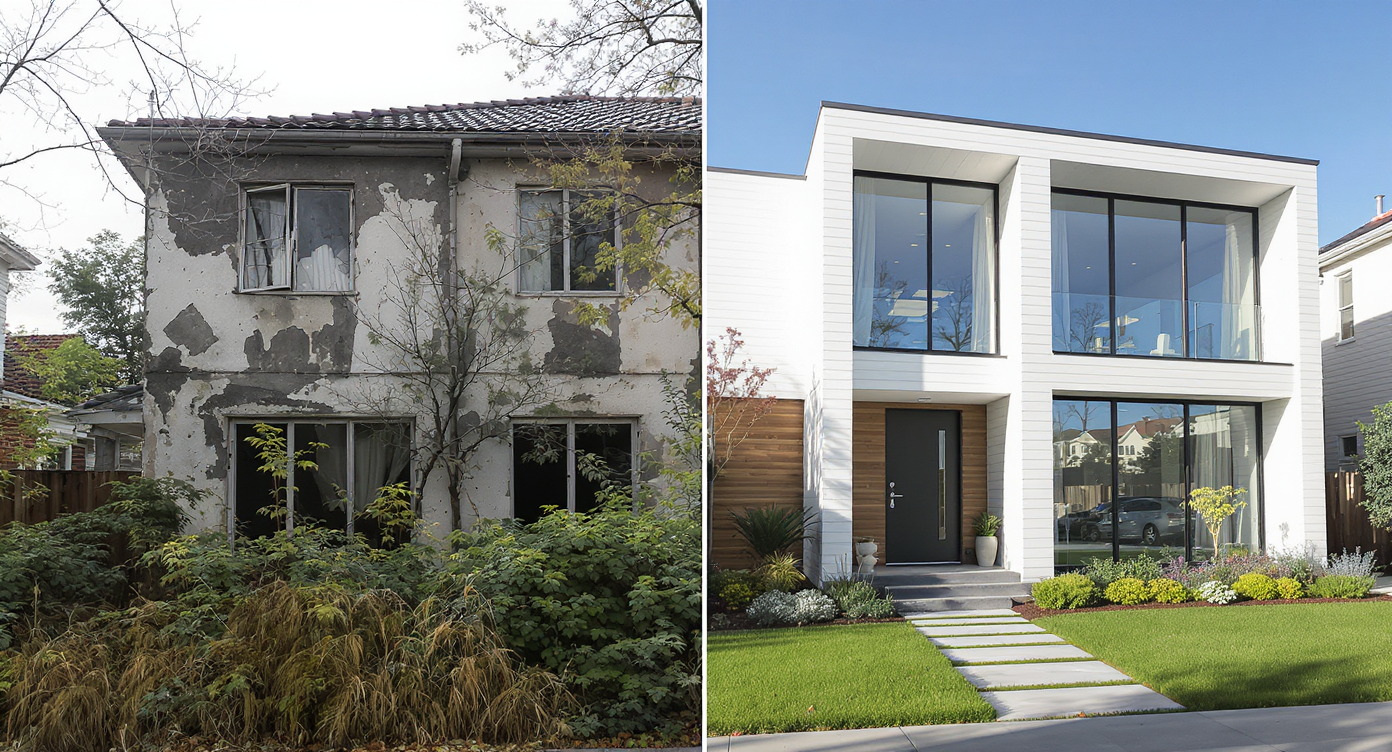
The State of House Flipping in 2026
House flipping remains one of the most profitable real estate strategies when executed correctly. The fundamentals haven't changed: buy low, renovate smart, sell high. What has changed is the market environment — interest rates, material costs, and buyer expectations require tighter execution and better deal selection.
Average flip profit in 2025 was approximately $65,000-75,000 per deal nationally. The top 20% of flippers averaged over $100,000. The bottom 20% broke even or lost money. The difference is almost always in the acquisition price and renovation management.
Step 1: Find the Right Deal
Not every cheap property is a good flip. The ideal flip property:
- Location: Desirable neighborhood with strong buyer demand (good schools, low crime, amenities)
- ARV: Supported by 3-5 recent comparable sales within 0.5 miles
- Repair scope: Medium rehab ($20-35/sqft) — enough to add value, not so much that risk explodes
- Layout: Functional floor plan that doesn't require structural changes
- Price: Acquisition at or below 70% of ARV minus repairs
Deal-Killing Red Flags
Walk away from properties with:
- Foundation issues requiring $15K+ in repair (unless deeply discounted)
- Environmental contamination (mold, asbestos, lead) with unknown scope
- Zoning issues that prevent your intended use
- Flood zones requiring expensive insurance
- Neighborhood values declining year-over-year
Step 2: Finance the Deal
Choose your financing based on your capital and experience:
- Cash: Fastest close, no interest costs, maximum negotiating power
- Hard money: 10-15% interest, 1-3 points, 7-14 day close — standard for flippers
- Private money: Negotiate terms directly with individual lenders — typically 8-12%
- HELOC: Use equity in your primary residence — lowest cost, but your home is at risk
- Partnership: JV with a capital partner — split the profit instead of paying interest
Step 3: Renovation Management
This is where most flippers either make or lose their profit.
The Renovation Plan
Before any demolition begins:
- Complete a detailed scope of work (SOW) listing every task
- Get 3 contractor bids based on the same SOW
- Set a firm budget with 15% contingency
- Establish a timeline with milestones
- Define the finish level based on your target buyer and ARV
Finish Level Strategy
Match your renovation quality to your market:
- $100-175K ARV: Builder-grade finishes — laminate counters, basic tile, LVP flooring, standard appliances
- $175-300K ARV: Mid-range finishes — granite/quartz counters, subway tile, LVP or hardwood, stainless appliances
- $300K+ ARV: Premium finishes — quartz counters, custom tile, hardwood, high-end appliances, smart home features
The cardinal rule: Don't over-improve for the neighborhood. A $50K kitchen in a $150K neighborhood doesn't add $50K in value.
Managing Contractors
- Never pay more than 30% upfront — pay in draws as work completes
- Visit the property 2-3 times per week — presence prevents problems
- Hold back 10% until final punch list — ensures the last details get finished
- Document everything — photos of progress, written change orders, and receipts
- Communicate scope changes immediately — every change that's not in writing becomes a dispute
The Renovation Timeline
Target timelines:
- Cosmetic flip (paint, flooring, fixtures): 2-4 weeks
- Medium rehab (kitchen, bathrooms, mechanicals): 6-10 weeks
- Full renovation (gut to studs): 12-20 weeks
Every week of delay costs you in holding costs (mortgage, insurance, taxes, utilities). A project that runs 4 weeks over budget at $2,000/month in holding costs just ate $8,000 of your profit.
Step 4: Selling Strategy
Pricing
- Price at or slightly below market based on your comp analysis
- The first 2 weeks on market generate the most interest — pricing right from day one is critical
- Overpricing leads to DOM accumulation, which leads to price reductions, which leads to below-market offers
Staging and Presentation
Staged homes sell 5-10% higher and 30-50% faster than empty homes:
- Professional staging: $2,000-5,000 (worth the investment on $200K+ ARV)
- Virtual staging: $100-300 per photo (budget-friendly alternative)
- Minimum: declutter, deep clean, fresh landscaping, professional photography
Listing and Marketing
- List on MLS through your agent
- Professional photography (non-negotiable — do not use your phone)
- Social media marketing (Instagram, Facebook)
- Open houses the first weekend
- Broker's open (invite area agents to preview)
Step 5: The Numbers
Complete Flip Budget Example
- Purchase: $95,000
- Closing costs (buy): $3,000
- Renovation: $35,000
- Contingency (15%): $5,250
- Holding costs (4 months): $8,000
- Staging: $3,000
- Selling costs (agent commissions 5-6%): $10,800
- Closing costs (sell): $2,000
- Total investment: $162,050
- Sale price (ARV): $210,000
- Gross profit: $47,950
Key Metrics
- Return on Investment: $47,950 / $162,050 = 29.6%
- Cash-on-Cash (if financed): much higher since leverage reduces your cash in
- Monthly ROI: 29.6% / 4 months = 7.4% per month
- Annualized: Approximately 89% (if you can replicate every 4 months)
The Bottom Line
Successful house flipping in 2026 requires disciplined acquisition (never exceed the 70% rule), tight renovation management (detailed SOW, contractor oversight, timeline discipline), and strategic selling (price right, stage, professional marketing). The profit is in the buy — if you pay too much, no amount of renovation or marketing skill can save the deal. Run every deal through the numbers before committing a single dollar.
Ready to automate your acquisitions?
See how AutomizeCRM can transform your real estate business.
Schedule a Demo