Driving for Dollars in 2026: Finding Off-Market Deals From Your Car
How to systematically drive neighborhoods, identify distressed properties, and turn physical scouting into contracted deals.
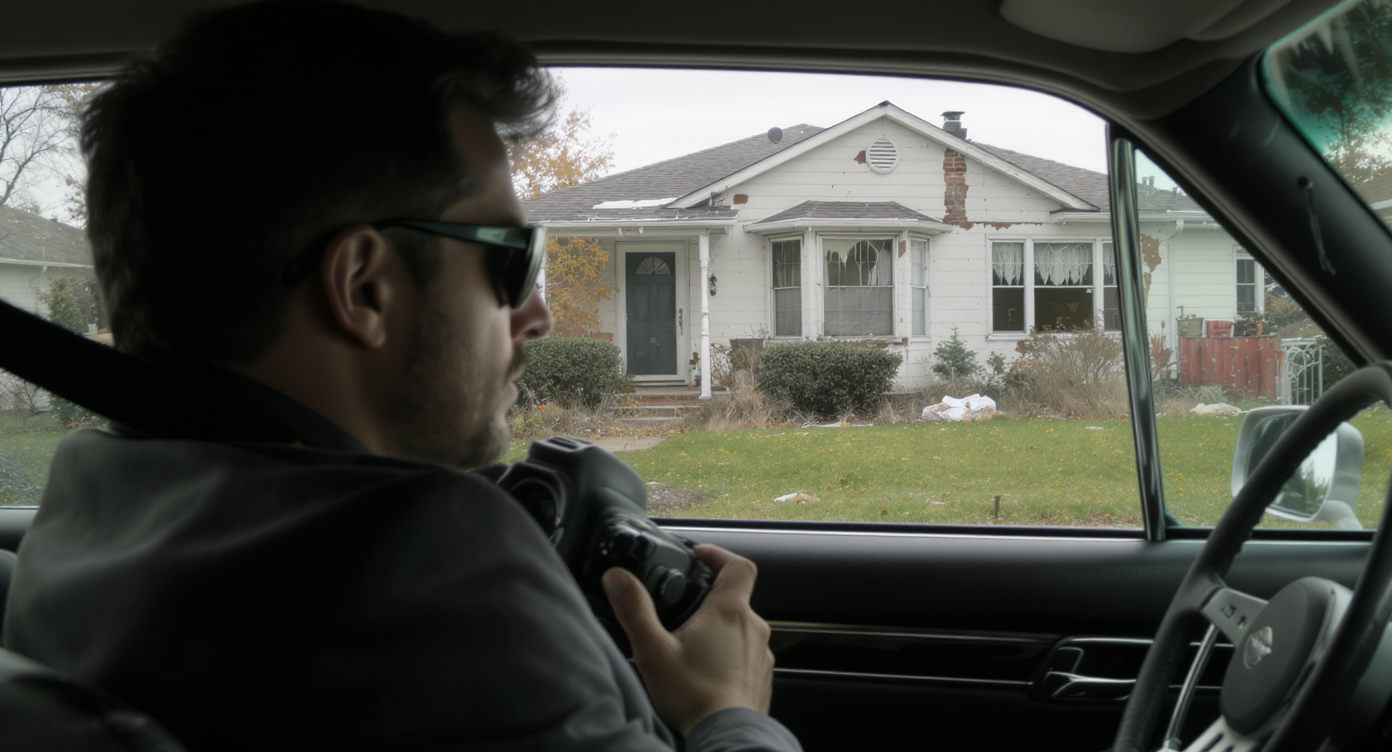
What Is Driving for Dollars?
Driving for dollars means physically driving through neighborhoods to identify distressed or vacant properties that might be off-market opportunities. While most lead generation in 2026 is data-driven (list pulls, skip tracing, automated outreach), driving for dollars remains one of the highest-quality lead sources available.
Why? Because you've personally verified the property's condition. A data list tells you someone owns an absentee property — driving for dollars shows you that property has boarded windows, an overgrown yard, and a code violation notice on the front door. That physical verification dramatically increases your confidence that the owner might be motivated.
What to Look For
When driving neighborhoods, identify these distress indicators:
High-Confidence Indicators
- Boarded-up windows or doors — the property has been physically secured, likely vacant for months
- Visible structural damage — fire damage, roof collapse, foundation issues
- City code violation notices — posted on the property by municipal inspectors
- Utility disconnection notices — indicates the property is not occupied
- Mailbox overflow — weeks or months of accumulated mail
Medium-Confidence Indicators
- Overgrown lawn and landscaping — yard hasn't been maintained in weeks or months
- Newspapers piling up — delivered but not collected
- Broken or missing fixtures — gutters, downspouts, house numbers, railings
- No curtains or window coverings — suggests the interior is empty
- Trash or debris accumulation — on the property or in the yard
Contextual Indicators
- Properties that stand out from the neighborhood — one neglected house on a well-maintained block
- For-sale-by-owner signs that have been up for months
- Renovation projects that appear abandoned — dumpsters, scaffolding, but no workers
- Properties with multiple liens — sometimes indicated by legal notices posted on the property
The Systematic Approach
Random driving wastes time. Build a system:
1. Target Specific Neighborhoods
Focus on areas where:
- Recently sold comps support strong ARV (you want to wholesale in areas buyers actually want)
- There's a mix of maintained and distressed properties (pure war zones have no buyer demand)
- You already have deal history or market knowledge
- Property values are in your target range ($80K-$250K for most wholesale markets)
2. Drive Specific Routes
- Map your neighborhoods in advance
- Drive every street systematically — don't skip blocks
- Budget 2-3 hours per session
- Cover 200-400 properties per driving session
- Drive the same neighborhoods monthly to catch new distressed properties
3. Document Everything
For each distressed property you identify:
- Note the address immediately
- Take photos from the car (exterior condition, yard, any posted notices)
- Rate the distress level (1-5 scale)
- Record the time and date
- Use a tracking app (DealMachine, PropStream, or a simple spreadsheet)
4. Research Ownership
After your driving session:
- Look up each property owner through your county assessor
- Skip trace the owner (phone, email, mailing address)
- Check for: tax delinquency, liens, code violations, and ownership history
- Cross-reference with your existing data lists — is this owner already in your CRM?
5. Make Contact
- Call or text the owner within 24 hours of identifying the property
- Lead with physical verification: "I was driving through your neighborhood and noticed your property at [address] appears to be vacant..."
- This approach has a significantly higher contact-to-conversation rate than cold data-based outreach because you can speak specifically about the property's condition
Budgeting
Driving for dollars costs:
- Gas: $30-50 per driving session (2-3 hours)
- Time: 2-3 hours driving + 1-2 hours post-research
- Tracking app: $0-100/month depending on tool
- Skip tracing: $0.05-0.15 per identified property
At 10 driving sessions per month (20-30 hours total), expect to identify 50-100 distressed properties. Of those, 10-20% will have contactable, potentially motivated owners. Budget 1-2 contracted deals per month from driving for dollars alone.
Combining Driving for Dollars with Data Lists
The most effective investors combine physical scouting with data-driven lead gen:
- Pull your data lists (absentee, tax delinquent, foreclosure, etc.)
- Flag properties in your target neighborhoods from those lists
- Drive those specific neighborhoods to physically verify list properties
- Add newly identified properties (not on your lists) from your driving sessions
- Prioritize outreach to properties that are both on your list AND physically verified as distressed
A property that shows up on your "tax delinquent + absentee" list AND has boarded windows when you drive by? That's a Tier 1 lead.
The Bottom Line
Driving for dollars in 2026 is about system, not random scouting. Target specific neighborhoods. Drive systematically. Document every distressed property. Research ownership immediately. Contact within 24 hours. Combine with your data lists for maximum effectiveness. Physical verification remains one of the highest-quality lead sources in real estate investing.
Ready to automate your acquisitions?
See how AutomizeCRM can transform your real estate business.
Schedule a Demo